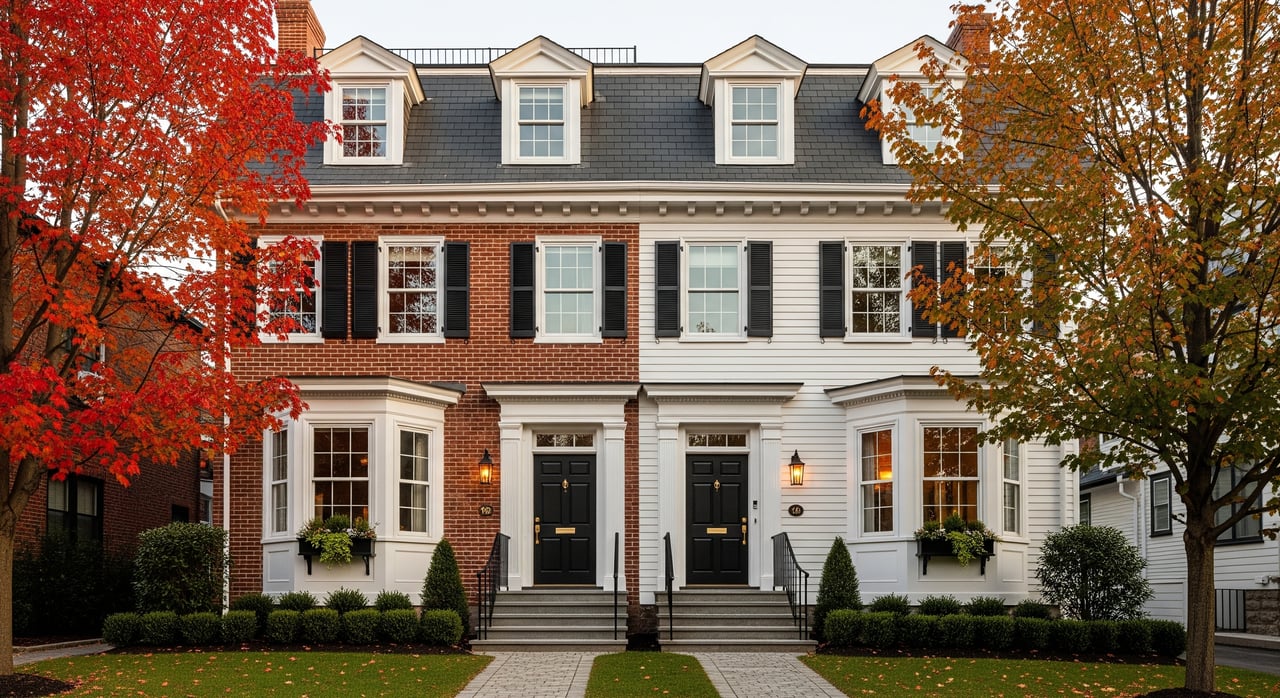
What if your neighbor’s rent paid most of your mortgage? That is the simple idea behind house hacking, and it can work in Manchester if you plan your numbers and financing carefully. If you are exploring a duplex, you likely want lower living costs today and long-term equity growth tomorrow. In this guide, you will learn how house hacking works, which loans fit 2 to 4 units, and a practical way to estimate rents and expenses in Manchester and nearby Southern NH markets. Let’s dive in.
House hacking defined
House hacking means you buy a small multi-unit property, live in one unit, and rent the other unit or units. A duplex is the most common starting point. Because you live there, most lenders treat it as a primary residence, which can unlock lower down payments and better rates than pure investment loans.
Typical goals include reducing your monthly housing cost, building equity while you live on-site, and learning to manage a rental before scaling up. You generally must move in within about 30 to 60 days after closing and intend to keep it as your primary residence for about 12 months.
Why duplexes work in Manchester
A duplex often has a lower purchase price than larger buildings, yet the second unit’s rent can offset a significant part of your payment. Management is simpler than a triplex or fourplex. You also control your living environment while building rental experience.
Manchester’s mixed housing stock and proximity to major employers help sustain rental demand across many micro-neighborhoods. Property taxes play a larger role in New Hampshire budgets, so you will want to verify the tax bill early in your analysis.
Financing options for 2 to 4 units
Choosing the right loan is critical. Each option below assumes you plan to occupy one unit.
FHA loans
- Low down payment is a common draw for first-time buyers.
- The property must meet HUD minimum property standards.
- Mortgage insurance applies, which increases the monthly cost.
Use FHA if you value lower upfront cash and accept the insurance cost and property condition rules.
VA loans
- Eligible veterans and active-duty buyers can finance up to four units while living in one.
- Benefits can include no down payment and competitive rates.
Use VA if you have entitlement and want minimal cash to close with strong terms.
Conventional loans
- Conventional financing allows 2 to 4 unit owner-occupied purchases.
- Down payment requirements and reserve needs are often higher as units increase.
- Private mortgage insurance can be removed in the future if you build sufficient equity.
Use conventional if you can bring a larger down payment and prefer conventional insurance rules.
Portfolio and bank loans
- Local banks and credit unions may offer flexible portfolio programs for 2 to 4 units.
- Terms, down payment, and rates vary by lender.
Use portfolio loans when your scenario or the property does not fit standard guidelines.
Renovation options
- FHA 203(k) and certain conventional rehab loans can finance purchase plus repairs in one loan.
- Expect extra paperwork and timeline for contractor bids and approvals.
Use when the property needs work and you want to finance improvements upfront.
Local assistance programs
- New Hampshire Housing and some municipalities offer first-time buyer mortgages or down payment assistance with income and price limits.
- Owner-occupancy is usually required.
Use these to reduce upfront cash needs if you qualify under program guidelines.
Evaluate rent and expenses
A good duplex decision starts with realistic rent estimates and a full expense budget.
Pull local rent comps
Look at current listings and recently leased units that match your unit size, condition, and location within Manchester and nearby towns in Rockingham, Strafford, and Hillsborough counties. Speak with local property managers for real-time insights on rent ranges and vacancy.
Capture the right variables
- Unit mix and square footage
- Bed and bath count
- Updates and amenities, parking, and included utilities
- Whether gas, electric, and water are separately metered
- Condition, occupied vs. vacant status, and seasonality
Budget the key expenses
- Vacancy allowance: 5 to 10 percent of potential rent
- Property taxes: verify with the Manchester city assessor
- Insurance: owner-occupant policy that covers rental exposure
- Utilities you pay: common-area electric or water if not separately metered
- Maintenance and repairs: 5 to 10 percent of collected rent, adjusted for age and condition
- Property management: 8 to 12 percent if you outsource
- Capital reserves: 3 to 5 percent of gross rent or a set amount per unit
- Mortgage payment: principal, interest, and any applicable mortgage insurance
Local factors to keep in mind
- Property taxes are a major line item in New Hampshire budgets. Verify early.
- Older buildings are common in Manchester. Plan for maintenance and potential rehab.
- New Hampshire does not tax wage income, which can influence tenant profiles and demand.
A simple framework to run the numbers
Use this step-by-step approach to get a clear picture before you write an offer.
Step-by-step formulas
Gather inputs: purchase price, down payment and closing costs, loan terms, expected rents, vacancy rate, taxes, insurance, utilities, maintenance, management, and capital reserves.
Potential Gross Income (PGI) = sum of monthly rents times 12.
Effective Gross Income (EGI) = PGI times (1 minus vacancy rate).
Operating Expenses (OPEX) = taxes + insurance + owner-paid utilities + maintenance + management + capital reserves.
Net Operating Income (NOI) = EGI minus OPEX.
Annual Debt Service (ADS) = yearly principal and interest plus any mortgage insurance and HOA if applicable.
Annual pre-tax cash flow = NOI minus ADS.
Cap rate = NOI divided by purchase price.
Cash-on-cash return = annual pre-tax cash flow divided by total cash invested.
Illustrative example only
The numbers below are for illustration only. You should replace them with current Manchester rents, tax data, insurance quotes, and live interest rates.
- Purchase price: 350,000 dollars
- Loan: FHA with 3.5 percent down (example only)
- Interest rate and term: 6.0 percent, 30-year fixed (illustrative)
- Rents: you live in one unit; the other rents for 1,400 dollars per month
- PGI: 1,400 times 12 = 16,800 dollars per year
- Vacancy: 7 percent, so EGI = 16,800 times 0.93 = 15,624 dollars
- Expenses (example): taxes 3,000, insurance 900, maintenance 1,200, management 1,680, capital reserves 800. Total OPEX = 7,580 dollars.
- NOI: 15,624 minus 7,580 = 8,044 dollars
- Loan amount: 337,750 dollars
- Estimated annual principal and interest at 6.0 percent: about 24,288 dollars
- FHA mortgage insurance would add to ADS. Obtain an exact quote from your lender.
- Pre-tax cash flow: 8,044 minus 24,288 = negative 16,244 dollars (illustrative)
What this means: with a low down payment and only one rented unit, the tenant’s rent may not cover the entire payment. The benefit is lower out-of-pocket housing cost while you live there and build equity. You can improve results by buying at a better price, increasing rent with updates, bringing a larger down payment, or reducing expenses through self-management and efficient utilities.
Legal and practical checks in Manchester
- Zoning and use: confirm the property is a permitted duplex and that prior conversions were permitted. Review parking and occupancy rules.
- Licensing and inspections: older properties may need lead paint disclosures and must meet smoke and carbon monoxide requirements. Some rentals require registration or periodic inspections.
- Landlord-tenant law: New Hampshire has specific rules for deposits, notices, habitability, and eviction procedures. Review official state resources or speak with a local attorney as needed.
- Insurance: confirm the right owner-occupied multi-family coverage with your insurer.
- Utilities and meters: separately metered units simplify billing and reduce surprises.
Your next steps
Use this checklist to move forward with confidence:
- Get pre-approved for a 2 to 4 unit owner-occupied loan and confirm how the lender will count rental income from the other unit.
- Pull current rent comps for the exact unit size and condition in your target area.
- Look up the actual property tax bill using the Manchester assessor before you finalize your numbers.
- Budget conservative vacancy and maintenance reserves, especially for older buildings.
- Price your offer using the framework above and update it with live rate and insurance quotes.
If you want a calm, data-backed plan for house hacking in Manchester or nearby Southern NH communities, connect with a local team that knows the neighborhoods, zoning, and numbers. Reach out to Tim Morgan to talk through financing paths, evaluate listings, and build your duplex game plan.
FAQs
What does house hacking a duplex in Manchester mean?
- You buy a two-unit property, live in one unit, and rent the other to reduce your housing cost while building equity.
How do lenders treat rental income on an owner-occupied duplex?
- Many programs let you use a portion of the other unit’s expected rent for qualifying, subject to documentation and program rules.
What down payment options exist for 2 to 4 unit homes?
- FHA and VA can offer low or no down options for eligible buyers, while conventional often requires larger down payments and reserves as unit count increases.
How do Manchester property taxes affect my duplex analysis?
- Taxes are a major expense in New Hampshire, so verify the current tax bill early and include it in your operating expenses.
What vacancy rate should I assume for Manchester rentals?
- A conservative starting point is 5 to 10 percent of potential rent, refined by current local data and property manager input.
Do I need to live in the duplex after closing?
- Most owner-occupant loans require you to move in within about 30 to 60 days and intend to live there for at least 12 months.
What should I budget for maintenance and capital reserves?
- Many owners set 5 to 10 percent of collected rent for maintenance and 3 to 5 percent for capital reserves, adjusted for the building’s age and condition.